


Behind the Scenes: How Professional Porn Is Made
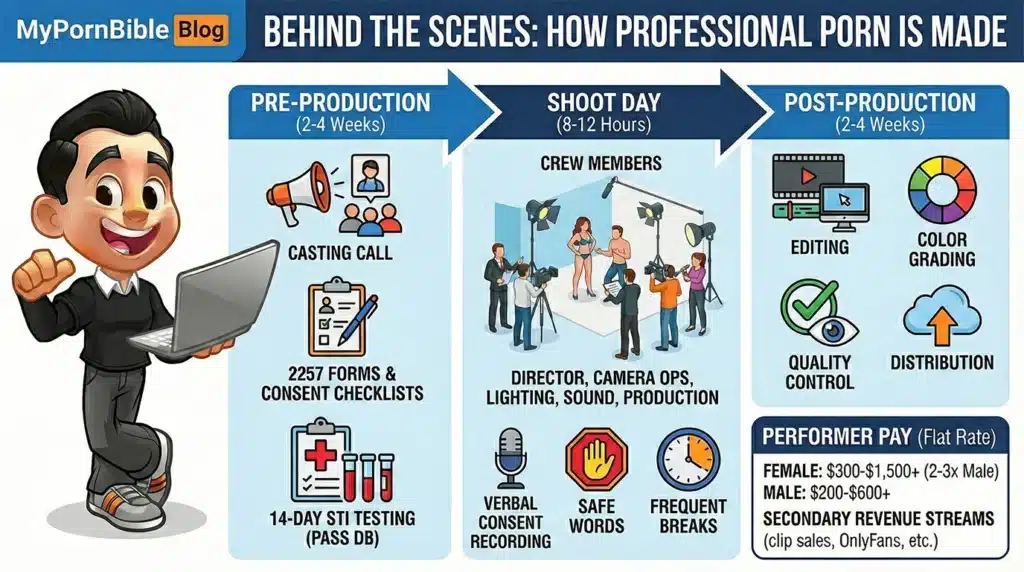
Image created using advanced AI technology, professionally refined by MyPornBible editorial team.
The production process you never see — from casting calls to consent protocols, STI testing requirements to shoot-day logistics. An honest look at how the sausage gets made.
What Happens Before a Porn Shoot?
Professional porn production begins weeks before anyone takes their clothes off, starting with casting, booking, scene planning, and mandatory health testing. The pre-production process for a single scene typically takes 2-4 weeks from concept to shoot day.
Studios start by developing scene concepts — storyline (if any), performers needed, location requirements, and specific content boundaries. Casting follows, where agents submit performer availability and the studio matches performers based on chemistry tests, physical compatibility, and willingness to perform specific acts.
Once performers are booked, legal paperwork begins. This includes model releases, 2257 compliance documents (proof of age), tax forms, and increasingly detailed content agreements specifying exactly what will and won't happen on camera.
Federal law (18 U.S.C. § 2257) requires producers to verify and document the age of every performer. Studios must maintain records including government ID copies and be prepared for federal inspection. Non-compliance carries serious criminal penalties.
How Does STI Testing Work in Porn?
Professional porn performers must present a valid STI test dated within 14 days before any scene involving genital contact. The industry uses the PASS (Performer Availability Screening Services) database to verify current test status in real-time.
Standard panels test for HIV, gonorrhea, chlamydia, syphilis, hepatitis B, hepatitis C, and trichomoniasis. Tests must come from industry-approved clinics that report results directly to the PASS system — performers can't simply bring a printout from their personal doctor.
The 14-day window represents a balance between safety and practicality. HIV RNA tests can detect infection within 9-11 days of exposure. The industry chose 14 days to provide a margin while allowing performers to work regularly.
The PASS System
PASS replaced the older AIM system after a 2011 shutdown. It's a centralized database where producers can verify a performer's test status without seeing actual medical results — just a green (valid) or red (expired/positive) indicator.
Performers control their own profiles and can revoke access. The system costs performers approximately $150-200 per test, which they typically cover themselves.
| Test | Window | Method | Required |
|---|---|---|---|
| HIV RNA | 9-11 days | PCR | Yes |
| Gonorrhea | 1-14 days | NAAT | Yes |
| Chlamydia | 1-14 days | NAAT | Yes |
| Syphilis | 3-6 weeks | Blood | Yes |
| Hepatitis B/C | 2-6 weeks | Blood | Yes |
| Trichomoniasis | 1-4 weeks | Culture | Yes |
When a performer tests positive for HIV or another serious STI, the industry issues a production moratorium. All shoots halt while contact tracing identifies potentially exposed performers. These moratoriums typically last 1-3 weeks and are taken extremely seriously.
What Are the Consent Protocols?
Modern consent protocols require performers to explicitly agree to every sexual act before shooting begins, documented in writing and confirmed verbally on camera. This "yes list" model replaced older approaches where performers were sometimes surprised by requests during scenes.
Before arriving on set, performers receive a detailed content checklist specifying every act planned for the scene. They initial next to each act they consent to perform. Any act not explicitly approved is off-limits, regardless of what happens in the moment.
Many productions now include a verbal consent recording at the start of filming. On camera, before any sexual content, performers confirm their name, that they're of age, that they're not under the influence, and that they consent to the specific acts listed.
Safe Words and Ongoing Consent
Professional sets use safe words that performers can invoke at any time to pause or stop a scene. The traffic light system is common: "yellow" means slow down or check in, "red" means stop immediately.
Reputable directors also check in periodically during scenes, especially intense ones. These check-ins are edited out but happen more frequently than viewers might assume.
Post-Scene Verification
After shooting, performers sign additional paperwork confirming the scene went as agreed. Some studios conduct brief exit interviews to ensure no boundaries were crossed. This creates a documented consent trail from booking through completion.
Consent protocols tightened significantly after 2017. Studios that previously relied on verbal agreements now require extensive written documentation. Some maintain "no-fly lists" of performers or directors with credible boundary violation allegations.
What Does a Typical Shoot Day Look Like?
A typical professional porn shoot runs 8-12 hours total, though performers might only have sex for 1-3 hours of that time. The rest involves setup, lighting adjustments, dialogue, multiple takes, and extensive breaks.
Performers typically arrive 1-2 hours before filming for makeup, wardrobe, and paperwork verification. The director briefs everyone on the scene, confirms boundaries, and establishes the shooting order. Sets are closed to non-essential personnel.
Sample Shoot Day Timeline
8:00 AM: Performers arrive, verify test status, sign paperwork
9:00 AM: Makeup and wardrobe
10:00 AM: Director briefing, verbal consent recording
10:30 AM: Non-sexual scenes (dialogue, setup shots)
12:00 PM: Lunch break
1:00 PM: Sexual content filming begins
4:00 PM: Breaks as needed, position/angle changes
6:00 PM: Wrap, exit paperwork, payment
What looks like continuous sex on screen is assembled from fragmented takes. Directors stop for angle changes, lighting adjustments, fluffing (maintaining erection), hydration, and performer comfort. A 30-minute scene might take 3+ hours to film with all interruptions.
Temperature control is a constant concern — sets are often cold to prevent sweating under hot lights, but this can cause discomfort. Performers take frequent breaks to warm up, rehydrate, and stretch. It's more athletic than erotic from the inside.
Who Works on a Professional Porn Set?
A professional porn set typically has 10-20 crew members beyond the performers — similar to mainstream film production, scaled down. Everyone from lighting technicians to makeup artists contributes to the final product.
Key Roles Explained
The director controls the creative vision, positions performers, calls for specific acts, and decides when each segment is complete. Directors range from hands-off (letting performers drive) to highly specific.
Camera operators capture the action from multiple angles simultaneously. Professional productions use 2-4 cameras to ensure coverage and reduce the need for repeated takes.
The production manager handles logistics — coordinating schedules, managing paperwork, ensuring performers are comfortable, and troubleshooting problems. They're often the main point of contact for performers.
Everyone on a professional set has seen thousands of hours of explicit content and approaches it with clinical professionalism. The atmosphere is more factory than fantasy — focused, efficient, and business-like.
What Happens After the Shoot?
Post-production transforms raw footage into finished content through editing, color grading, sound mixing, and quality control — a process that typically takes 2-4 weeks per scene. What performers filmed is often significantly different from what viewers eventually see.
Editors assemble the best takes, remove awkward moments, adjust pacing, and create multiple versions (full scene, trailers, clips). Color grading ensures consistent skin tones and lighting across shots from different angles.
The Editing Process
Assembly: Editors sync multiple camera angles and select the best footage for each moment. A 3-hour shoot might yield 45 minutes of usable content.
Pacing: Scenes are structured with beginning, middle, and end — building intensity toward the finale. Natural pauses and breaks are removed to create continuous flow.
Audio: Background noise is reduced, dialogue is enhanced, and music/effects are added. Some studios re-record audio in post for better quality.
After editing, content goes through quality control — checking for technical issues, ensuring legal compliance (watermarks, 2257 statements), and final approval. Then it's encoded for various platforms and scheduled for release.
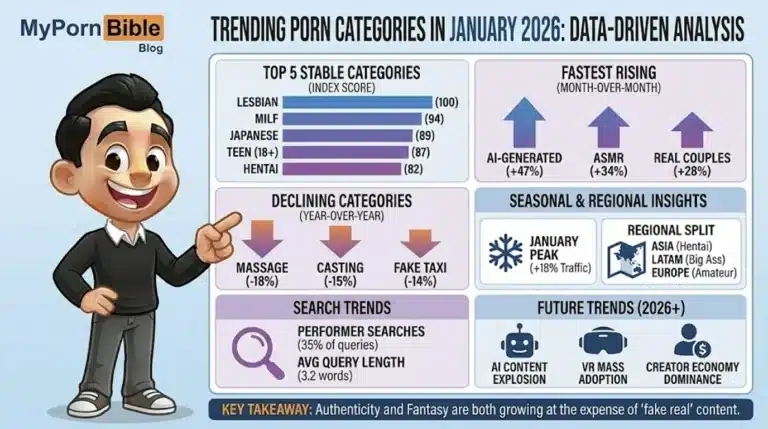
Curious which types of content viewers are actually searching for once it's released? See which categories dominate in our January 2026 trends report.
How Much Do Performers Actually Get Paid?
Professional porn performer pay ranges from $300-$1,500 per scene for standard content, with rates varying based on acts performed, studio budget, and performer recognition. Top-tier performers and specialty content command higher rates.
Pay is typically flat-rate per scene, not hourly. A performer earns the same whether the shoot takes 4 hours or 12 hours. This incentivizes studios to work efficiently while protecting performer earnings regardless of complications.
| Scene Type | Female Rate | Male Rate | Notes |
|---|---|---|---|
| Solo | $300-600 | $200-400 | No partner |
| Boy/Girl | $800-1,200 | $400-600 | Standard |
| Girl/Girl | $600-1,000 | — | Per performer |
| Anal | $1,000-1,500 | $400-600 | Premium rate |
| Threesome+ | $1,200-2,000 | $400-800 | Multiple partners |
| Feature | $2,000-5,000+ | $600-1,500 | Top performers |
Female performers consistently earn 2-3x more than male performers for the same scenes. The economics reflect demand — there are far more men willing to perform than opportunities available, while female performers are the primary draw for most content.
Beyond scene rates, performers increasingly earn from secondary revenue streams: clip sales, OnlyFans subscriptions, cam shows, and personal appearances. For many, traditional scene work now serves primarily to build name recognition that drives these other income sources.
For more on how performers build their careers and brands, explore performer profiles and industry insights at MyPornBible.com.
Key Insights About Porn Production
- Professional porn is heavily regulated. Testing requirements, age verification (2257), and consent documentation create multiple compliance layers that legitimate studios navigate carefully.
- The 14-day testing window is industry standard. Performers must present valid STI tests from approved clinics, verified through the centralized PASS database before any genital contact.
- Consent protocols have evolved significantly. Written checklists, verbal on-camera confirmation, safe words, and post-scene verification create documented consent trails from booking through completion.
- Shoot days are long but sex is intermittent. 8-12 hour days might involve only 1-3 hours of actual sexual content, broken up by setup, angle changes, and frequent breaks.
- 15+ crew members work behind the camera. Directors, camera operators, lighting techs, sound engineers, makeup artists, and production managers all contribute to professional content.
- Post-production transforms raw footage. Editing, color grading, and sound mixing over 2-4 weeks turn fragmented takes into the seamless content viewers eventually see.
- Pay varies widely but favors female performers. Standard scene rates range from $300-$1,500, with female performers earning 2-3x male rates. Secondary revenue streams increasingly matter more than scene work.
Understanding how porn is made reveals an industry that — at the professional level — takes safety, consent, and documentation seriously. The final product looks nothing like the process that creates it. What appears spontaneous is carefully planned, documented, and assembled from hours of fragmented takes.
Find exactly what you're looking for with our guide to the best porn sites — vetted picks across the entire adult landscape.