
Porn Tips

How To Know Your Condom Size

How to know your condom size

Image created using advanced AI technology, professionally refined by MyPornBible editorial team.

A straight-talking, no-shame guide to finding a condom that actually fits — how to measure yourself, what the numbers on the box really mean, and why the right size makes everything safer and a lot more fun.

2
Measurements
3
Fit Types
52mm
Standard Width
2026
Updated
Section 01

Why Does Condom Size Matter?

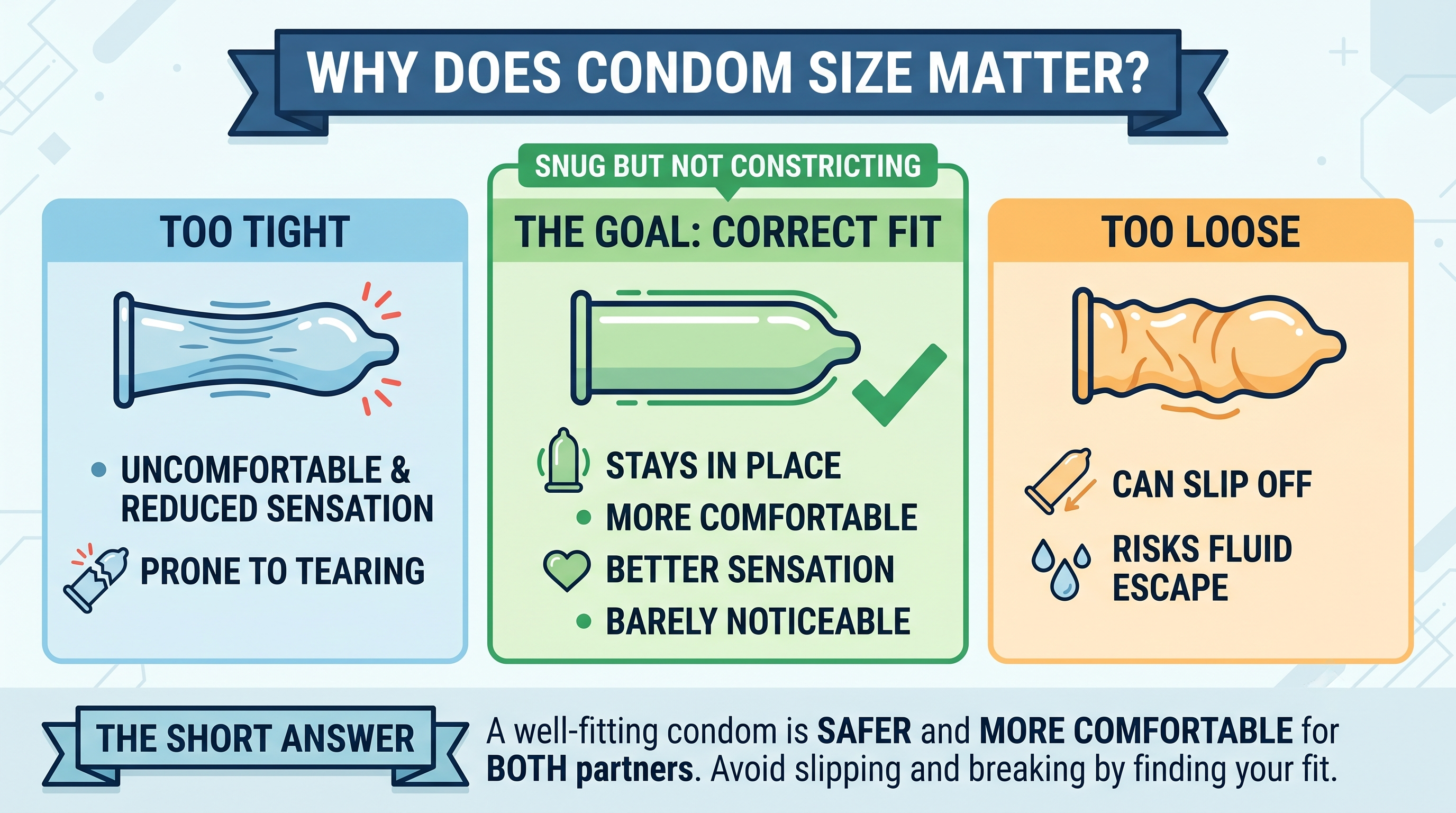
Condom size matters because a poorly fitting condom is more likely to slip off or break, which defeats the entire point of wearing one. The right fit keeps the condom in place, keeps you protected, and feels noticeably better for both partners.

A condom that is too tight is uncomfortable, can reduce sensation, and is more prone to tearing. A condom that is too loose can slide off during sex, letting fluid escape.

Fit also affects pleasure. When a condom sits right, most people barely notice it is there, which makes safe sex something you actually want to keep doing.

The Short Answer

A condom that fits well is safer and more comfortable. Too tight breaks more easily; too loose slips off. The goal is snug but not constricting.

Infographic showing why condom size matters with a well-fitting condom staying secure versus a poorly fitting one slipping or breaking

Why the right condom size matters

Section 02

How Do You Measure Yourself For A Condom?

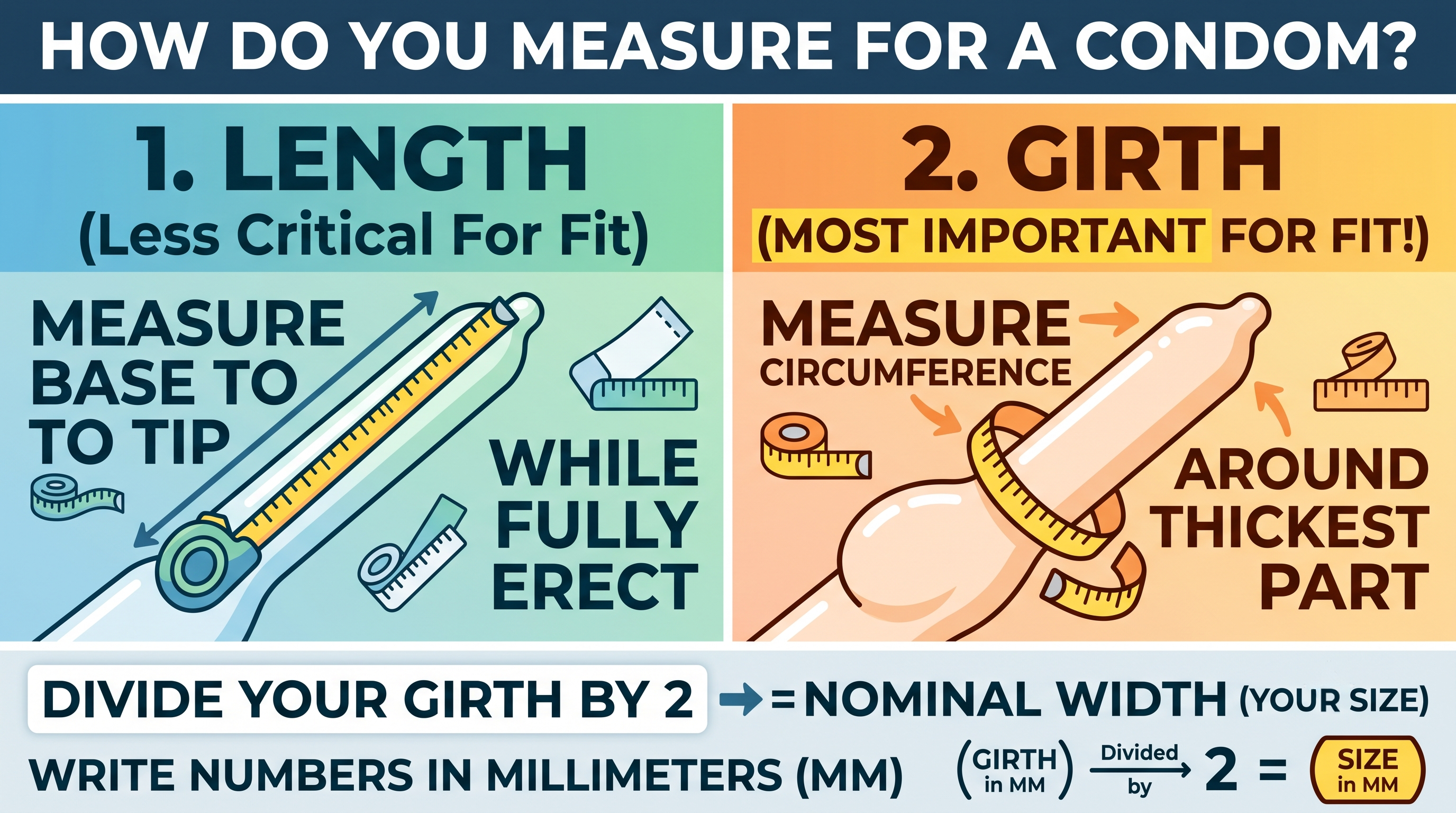
To measure yourself for a condom, take two numbers while fully erect: length from base to tip, and girth (the circumference) around the thickest part of the shaft. Those two measurements tell you almost everything you need to pick a size.

Measure when you are fully hard, since size changes a lot between soft and erect. A flexible tape measure works best, but a strip of paper and a ruler do the job too.

1

Length

Base To Tip
Step One

Place the end of the tape at the base, where the shaft meets your body, and measure straight to the tip. Press the tape lightly against the top of the shaft for an accurate reading.

Length mainly decides the nominal length of the condom, so it does not need to be perfect. Girth is the number that matters most for fit.

Fully Erect Base To Tip Less Critical
2

Girth

Circumference
Most Important

Wrap the tape around the thickest part of the shaft and note the circumference. If you use a paper strip, mark where it overlaps and measure that length against a ruler.

Girth is the key number for choosing a condom, because it determines the nominal width. A snug, standard, or large condom is decided almost entirely by this measurement.

Thickest Point Decides Width Key Number

Write both numbers down in millimeters if you can, since condom boxes are labeled in millimeters. To turn girth into the nominal width printed on the box, divide your circumference by two.

If measuring yourself has you curious about how you compare, our breakdown of Male Pornstar Sizes: Real Measurements vs Myths separates the on-screen fantasy from the actual numbers.

Diagram showing how to measure yourself for a condom by taking length from base to tip and girth around the thickest part of the shaft

How to measure length and girth

Section 03

What Do The Numbers On A Condom Box Mean?

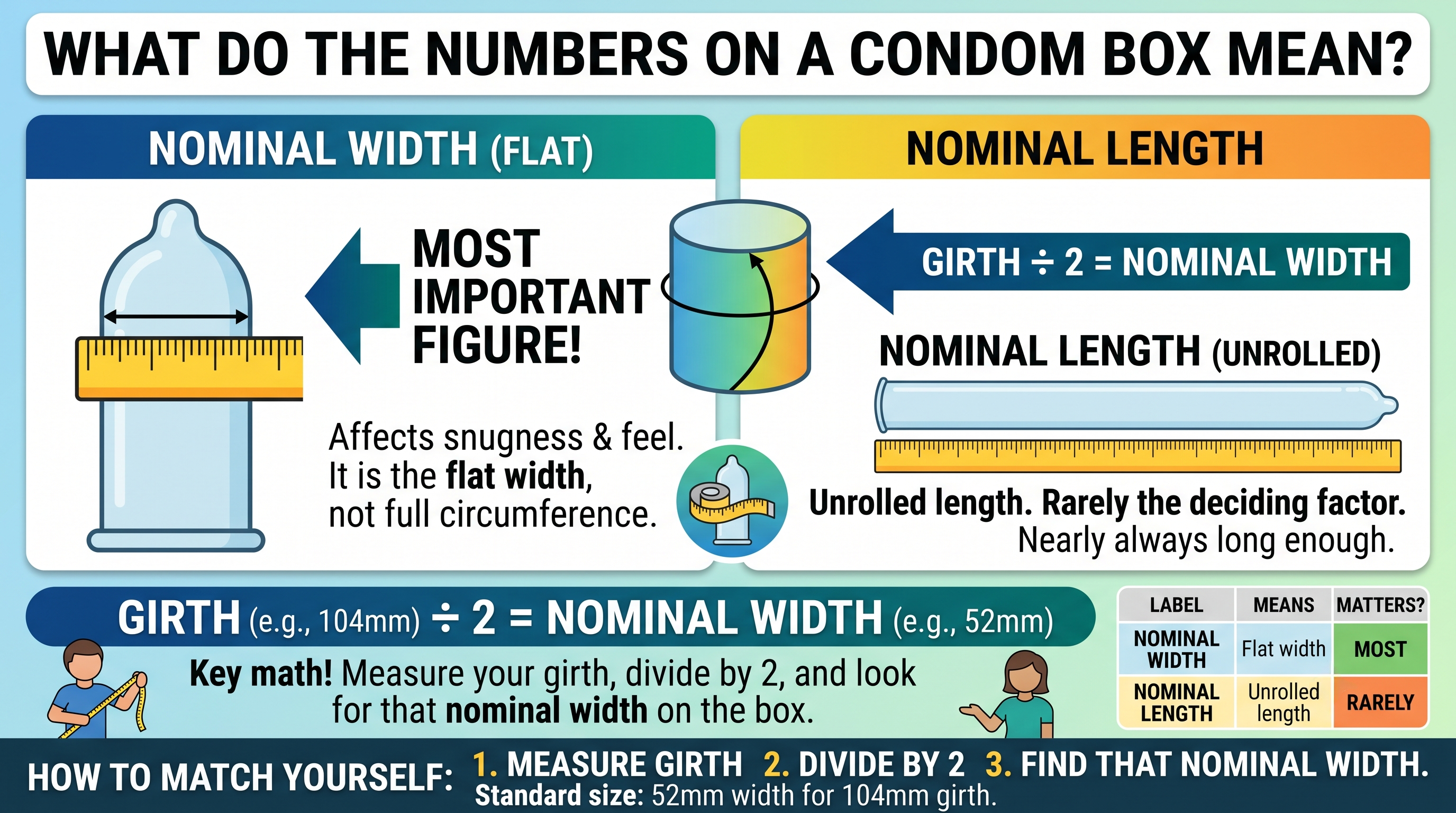
The two numbers on a condom box are nominal width and nominal length, both measured in millimeters. Nominal width is the most important figure, because it reflects how snug or roomy the condom will feel.

Nominal width is the flat width of the condom laid down, not its circumference. Because the condom is flat, a nominal width of 52mm wraps around a circumference of roughly 104mm.

Nominal length is how long the condom is when unrolled. Most condoms are long enough for nearly everyone, so length is rarely the deciding factor.

Label Means Matters?
Nominal widthFlat width in mmMost
Nominal lengthUnrolled lengthRarely
Girth ÷ 2Your target widthKey math

To match yourself to a box, divide your girth by two and look for that nominal width. A circumference of 104mm points you toward a 52mm width, which is the standard size.

Illustration explaining what the numbers on a condom box mean including nominal width and nominal length in millimeters

What the numbers on the box mean

Section 04

What Condom Size Should You Buy?

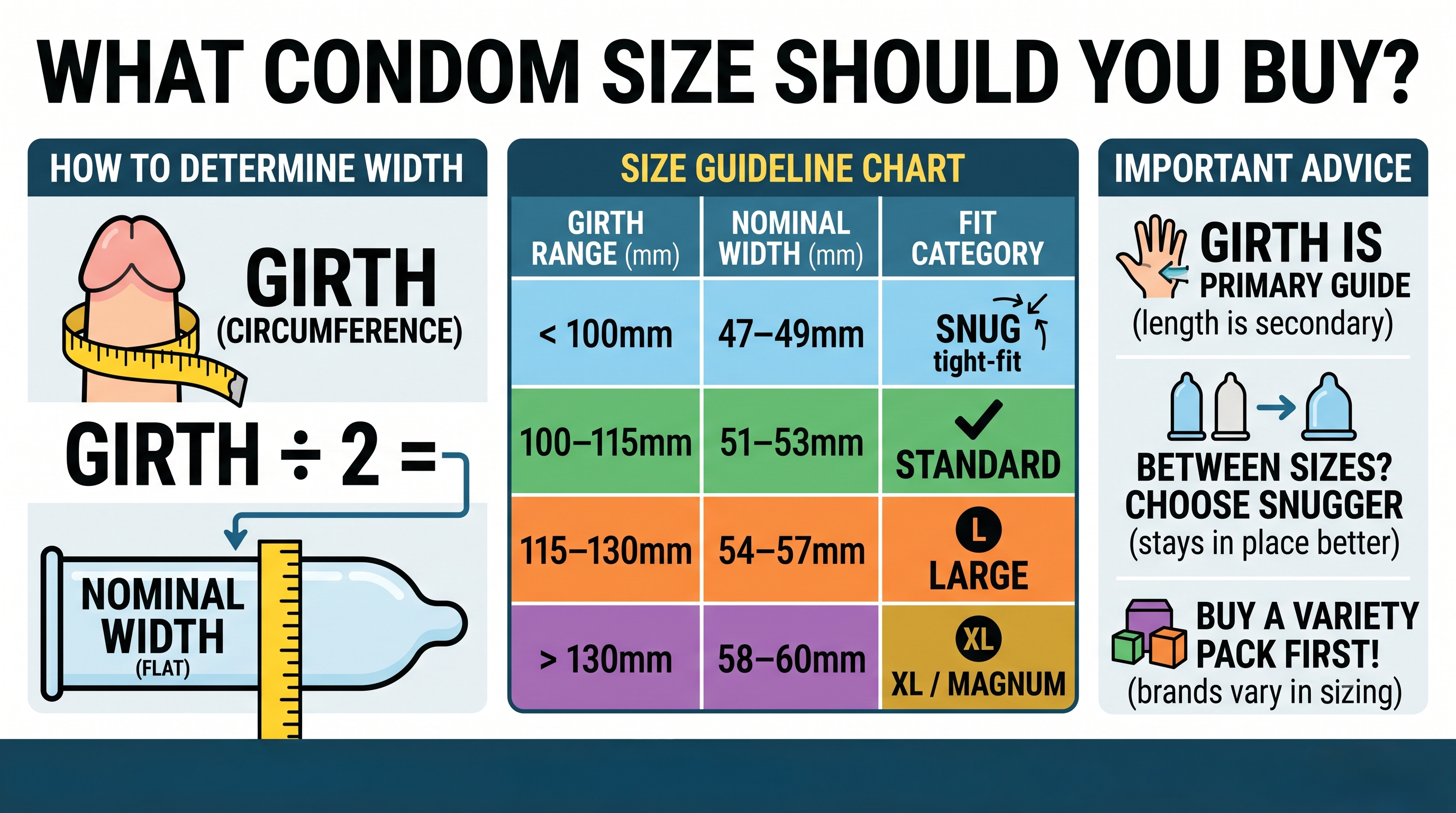
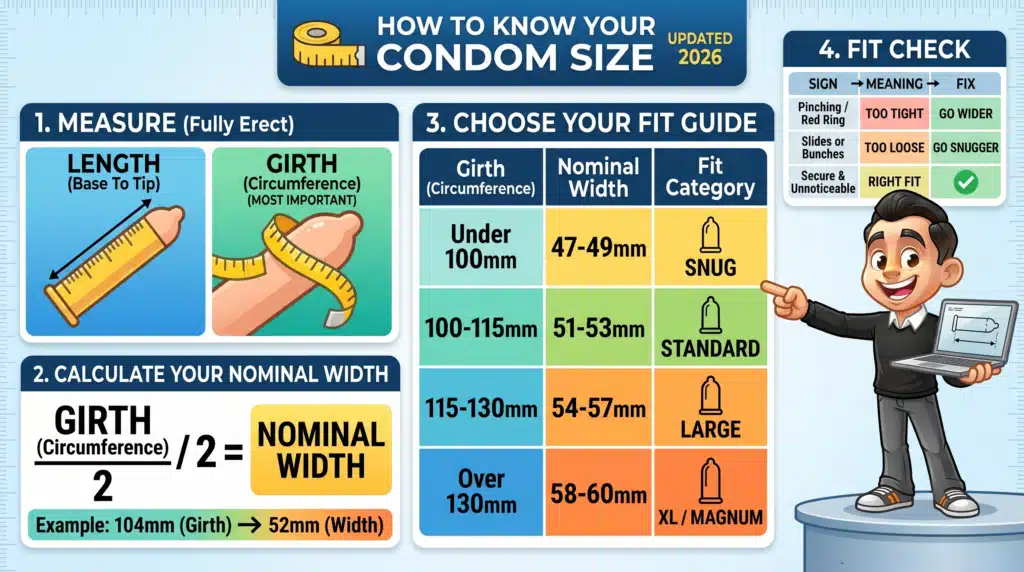
The condom size you should buy is the one whose nominal width matches your girth divided by two. The chart below converts common girth measurements into the fit category and nominal width to look for on the box.

Use girth as the primary guide and treat length as a secondary check. If you fall between two categories, the snugger option usually stays in place better.

Girth (Circumference) Nominal Width Fit Category
Under 100mm47–49mmSnug
100–115mm51–53mmStandard
115–130mm54–57mmLarge
Over 130mm58–60mmXL / Magnum

These ranges are guidelines, not strict rules, because brands size differently. The smartest move is to buy a small variety pack first and find the width that feels secure without pinching.

Once you have a condom that fits, you can focus on the fun part — our guide to the Top Sex Positions Ranked covers which positions keep a condom secure and feeling great.

Condom size chart converting girth measurements into nominal width and fit categories from snug to extra large

Condom size chart by girth

Section 05

Snug, Standard, Or Large: Which Fit Are You?

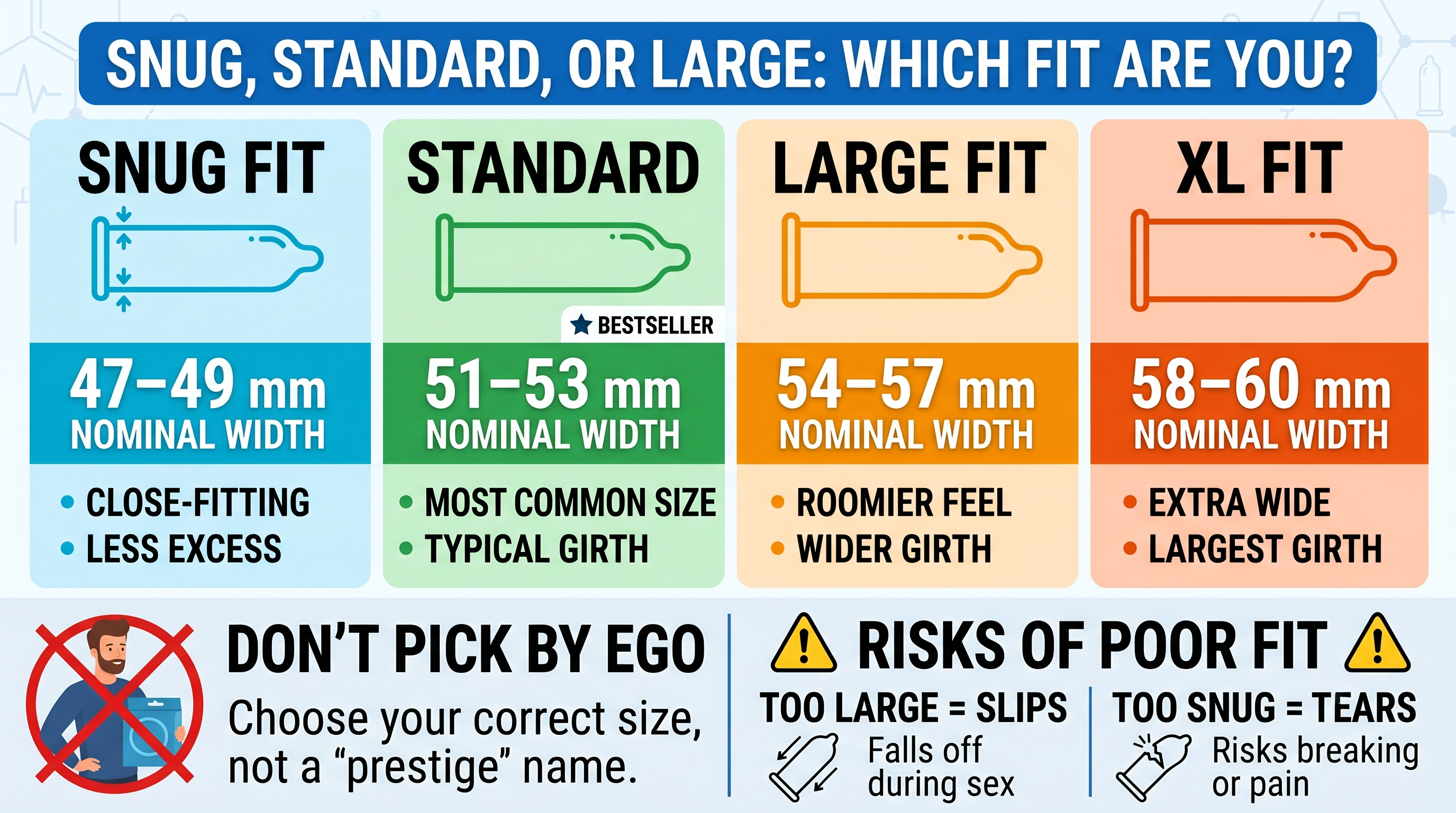
Condoms come in three broad fits — snug, standard, and large — defined mostly by nominal width rather than length. Knowing which category you fall into narrows your choice from dozens of boxes down to a handful.

Most people fall into the standard range, which is why it is the most common size on shelves. Snug and large exist because a one-size box genuinely does not work for everyone.

Typical Nominal Width By Fit
Snug
47–49
Standard
51–53
Large
54–57
XL
58–60

Do not pick a size based on ego. A large condom on a standard fit will slip, while a snug condom on a larger girth will feel tight and risk tearing.

Comparison of snug standard and large condom fits showing the typical nominal width range for each category

Snug, standard, or large fit compared

Section 06

How Do You Know If A Condom Is Too Tight Or Too Loose?

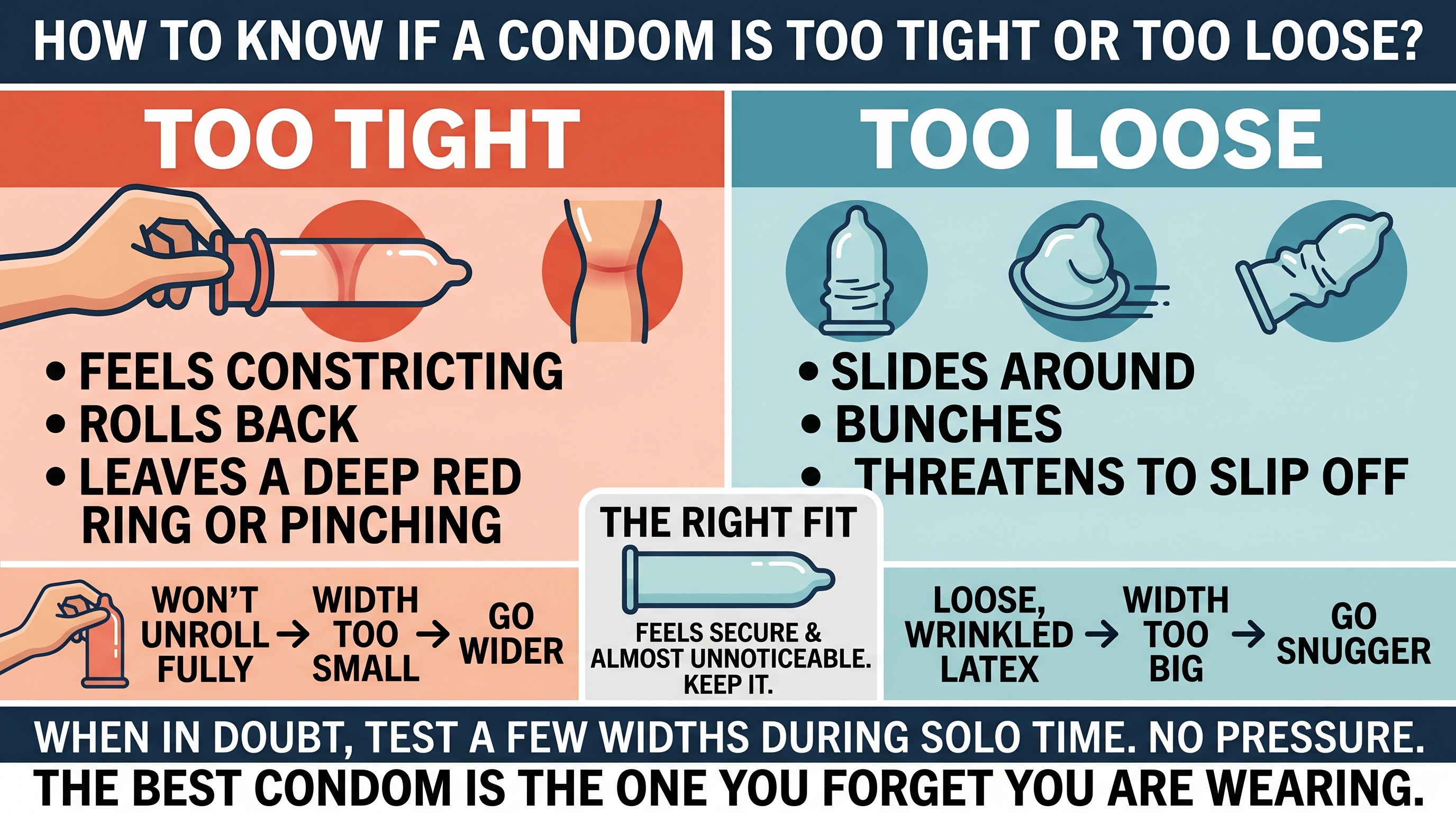
A condom is too tight if it feels constricting, rolls back, or leaves a deep red ring, and too loose if it slides around, bunches, or threatens to slip off. The right fit feels secure and almost unnoticeable.

If you struggle to unroll it all the way down, or it pinches at the base, the width is too small. Move up one nominal width and try again.

If there is loose, wrinkled latex or the condom shifts when you move, the width is too big. Dropping down one size usually fixes both slipping and bunching.

Sign Means Fix
Pinching, red ringToo tightGo wider
Won't unroll fullyToo tightGo wider
Slides or bunchesToo looseGo snugger
Secure, comfyRight fitKeep it

When in doubt, test a few widths during solo time so there is no pressure. The best condom is the one you forget you are wearing.

Guide showing the signs that a condom is too tight or too loose and how to fix the fit by changing nominal width

Signs a condom is too tight or too loose

Section 07

Frequently Asked Questions

Does length or girth matter more for condom size?

Girth matters more than length for condom size. Nominal width, which comes from girth, decides whether a condom feels snug or loose, while most condoms are long enough for nearly everyone regardless of length.

What is the most common condom size?

The most common condom size is a standard fit with a nominal width of about 52mm. This suits the majority of people, which is why standard condoms are the default option in most stores.

How do I convert my measurement to a condom width?

Divide your girth, the circumference around the thickest part of the shaft, by two to get your target nominal width. A circumference of 104mm corresponds to a 52mm nominal width.

Is it bad if a condom feels too tight?

Yes, a condom that feels too tight is more likely to break and is uncomfortable to wear. If a condom pinches or will not unroll fully, switch to a wider nominal width. If you are keen to explore further, see our Types of Sexual Kinks Complete Guide.

Section 08

Key Takeaways

What To Remember
  1. Fit keeps you safe. A condom that fits well is far less likely to slip off or break than one that is too tight or too loose.
  2. Measure two things while erect. Take your length from base to tip and your girth around the thickest part of the shaft.
  3. Girth is the key number. Divide your circumference by two to find the nominal width printed on the box.
  4. Standard suits most people. Around 52mm fits the majority, but snug and large exist for a reason, so pick by measurement, not ego.

The takeaway is simple: a few minutes with a tape measure turns safe sex from a chore into something genuinely comfortable. For more honest guides and reviews across every niche, explore our roundup of the top rated porn sites.